
A listed property, brought back to its better self.
Full external renovation of a listed residential home. Render, joinery and finishes specified and matched to the building's heritage character rather than applied over it.
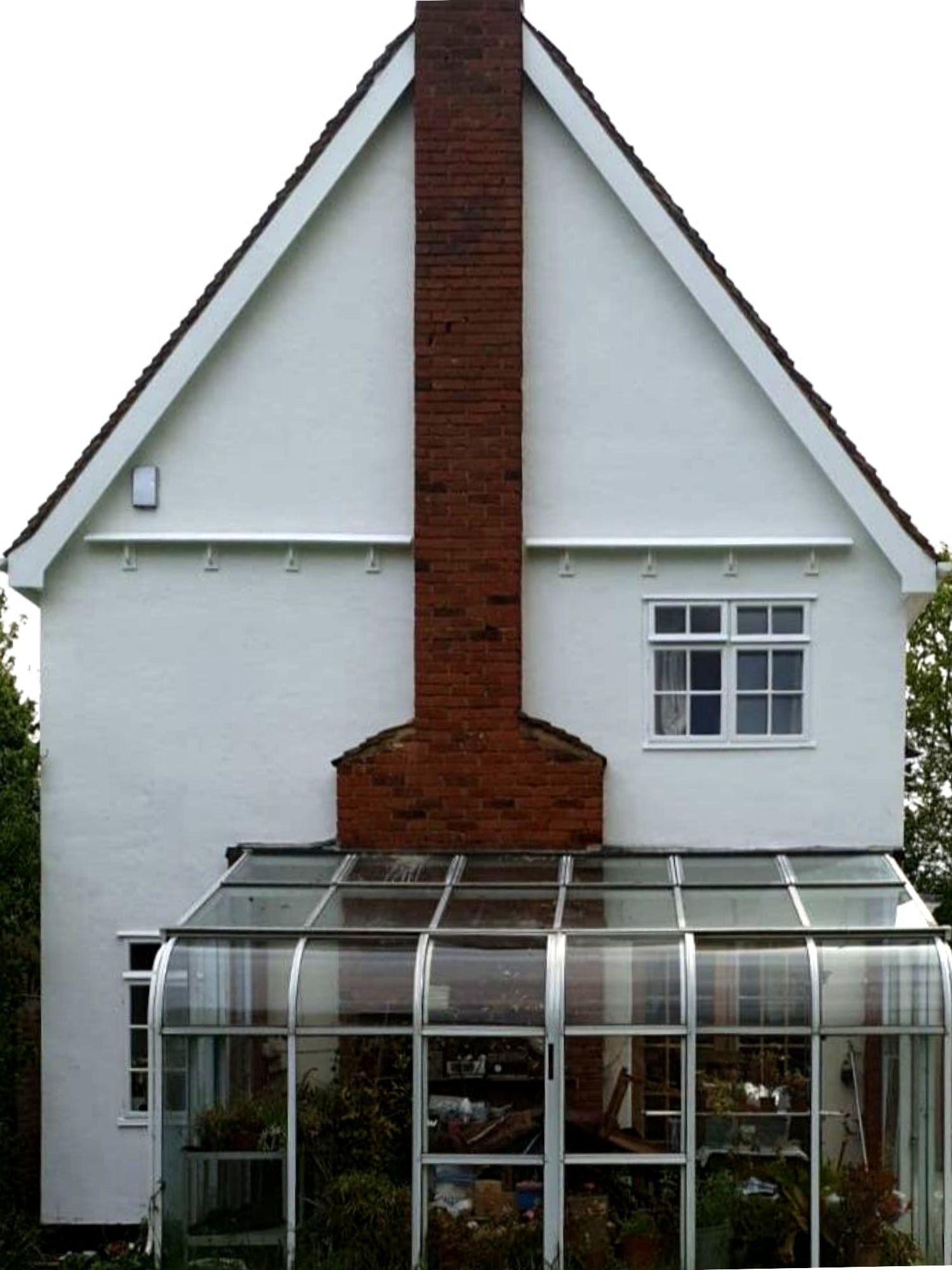
A heritage home that needed disciplined work.
Nationserv was appointed to deliver a full external renovation to a listed residential property. The work covered the entire envelope: rendering all four elevations, supplying and refitting new windows and doors, and matching the finishes so that new and retained work read as one composition.
Nationserv is a UK specialist insurance repair contractor delivering end to end building solutions, including listed and heritage property renovation. It is the same discipline that heritage insurance reinstatement demands: work to an existing fabric you did not build, with a standard set by what is already there.
The brief was simple in its asks and demanding in its execution. Listed properties cannot be treated like any other house. The render specification has to suit the substrate and the age of the building, new joinery has to read in proportion with what is already there, and finishes have to harmonise. None of it is improvised on site.
The detail is the whole project.
Anyone can paint a wall. Renovating a listed home means matching colour against weathered original material, sourcing window profiles that read as period, and preparing a substrate that has been doing its job for a century or more.
That last point is where most of the risk sits. An old wall does not behave like a new one, and a modern system applied without understanding what is underneath will either fail or trap moisture in a fabric that was built to breathe. The specification has to answer the building, not the catalogue.
The approach was to resist the easy wins and pause at the start. Strip back to sound material, establish what could be saved and what genuinely had to be replaced, then specify the right system for each element separately rather than one product across the whole envelope.
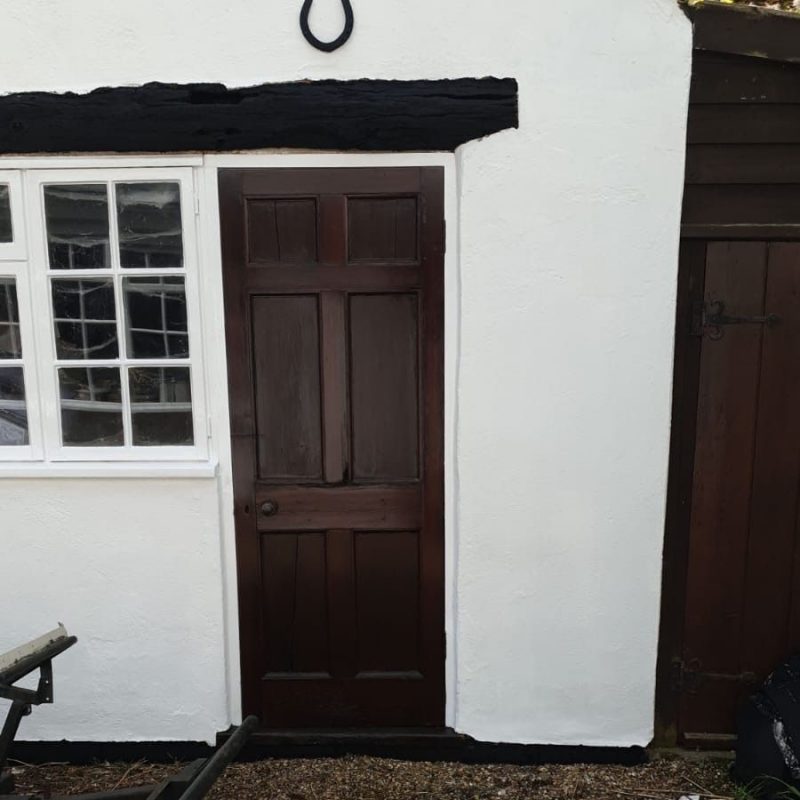
Prepare, specify, then finish.
Six steps, run in order, with each one signed off before the next began. On heritage work the sequence is not a convenience, it is the control: once a render coat is on, whatever was wrong underneath it is now permanent and expensive.
Surface preparation
Old and damaged surfaces removed back to sound substrate before any new work was applied, so nothing was built over material that was already failing.
Render to all elevations
External render applied across all four elevations, with the system selected to suit the substrate and the age of the building and to protect the fabric against moisture ingress and weathering.
Window and door replacement
New windows and doors supplied and refitted, with profiles selected to read correctly against the property's heritage character rather than to a standard modern section.
Heritage detail retained
Trim, mouldings and joinery details kept wherever they were sound, and replaced only where replacement could match the original profile.
Colour matched finishes
Colour matched across render, joinery and trim so the new work harmonises with what was preserved instead of announcing itself against it.
Painted and protected
Final coats and protective systems applied to give the renovation genuine longevity in UK exposure, rather than a finish that looks right for two winters.
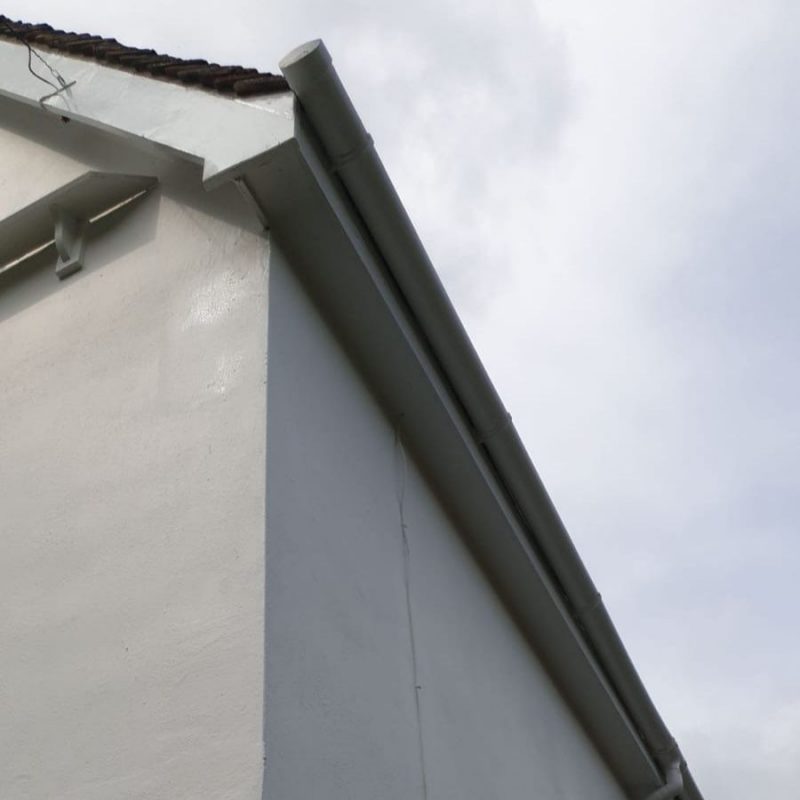
On a listed building, the better the work, the less of it you can see. If anyone can tell where we stopped and the original starts, we got it wrong.
Coherence, restored.
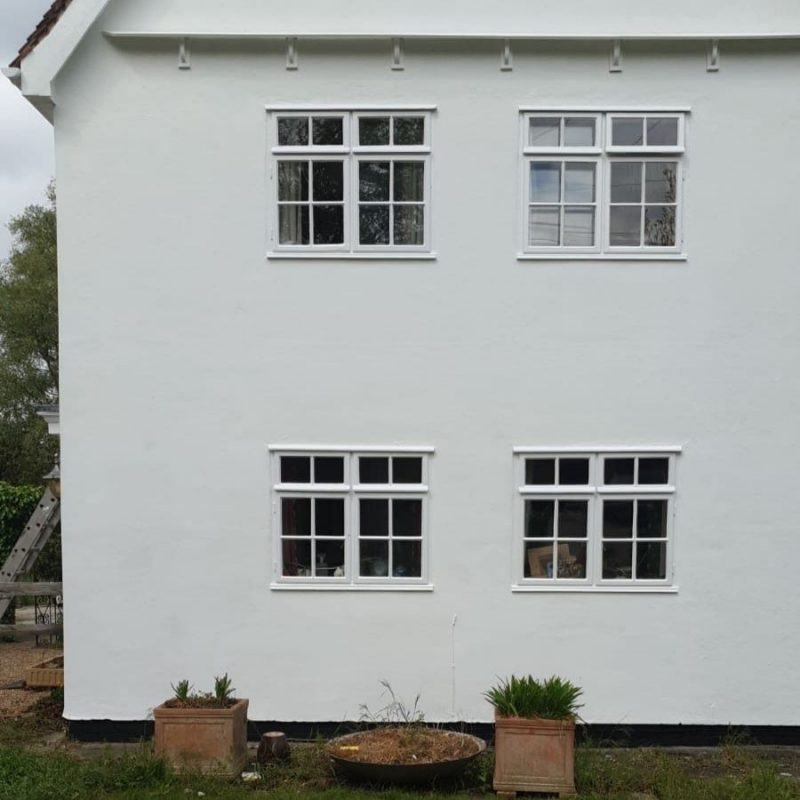
The renovation honoured the building. The new render protects the fabric that was there, the new joinery sits in proportion, and the colour palette reads as one across the whole envelope. From the road you cannot see where preservation ends and replacement begins, which is exactly the point.
All four elevations are weathertight and properly finished, with protective systems specified for genuine UK exposure rather than for the photograph on handover day. The retained detail is still doing its job alongside the new work rather than competing with it.
Six steps ran in strict order under a single main contractor, each one signed off before the next covered it. On heritage work that sequence is the whole control, because every stage permanently hides the one beneath it.
Renovating a listed property?
If you have a heritage home that needs disciplined work rather than a quick refresh, our surveyors are the right place to start. We will visit, scope it properly, and quote against what the building actually needs.