
Drying, strip out and restoration services.
Escape of water, flood and fire damage handled from first attendance to certificate of drying and full reinstatement, under one instruction.
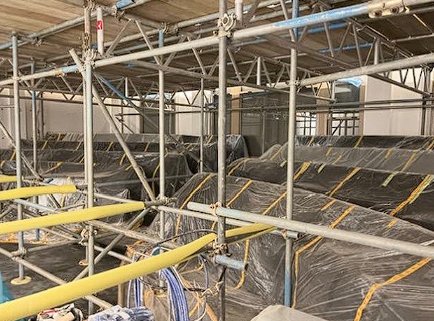
Wet buildings do not wait.
Nationserv provides drying, strip out and restoration services to UK insurers, loss adjusters and policyholders, covering escape of water, flood, storm and fire damage from the first hours of a claim through to full reinstatement.
Nationserv is an insurance repair contractor, not an insurer. Work is carried out on instruction from insurers and their appointed representatives, or directly for policyholders on a live claim, and the same team that dries the property is the team that puts it back.
Drying is where the cost of a water claim is decided. Every hour a building stays wet increases the volume of material that has to come out, extends the drying programme, and moves the claim closer to alternative accommodation. Move fast and a property can often dry in situ. Move slowly and the strip out scope grows on its own.
You cannot rebuild onto damp.
A property signed off wet fails after reinstatement, and it fails expensively. New plaster blows, flooring lifts, decoration stains through, and the claim reopens with a second strip out on top of the first. Everything that follows depends on the structure being genuinely dry, not looking dry.
That is why drying is monitored against recorded readings rather than judged by eye, and why the process finishes with a certificate of drying. The certificate is the evidence for the adjuster that the building reached a dry standard before anyone started rebuilding onto it.
The other half of the job is knowing what actually needs to come out. Where a building can dry in situ without trapping moisture behind a vapour barrier, stripping out is avoided. Strip out is specified where materials are unsalvageable or where leaving them would stop the structure behind from drying, which is an assessment, not a default.
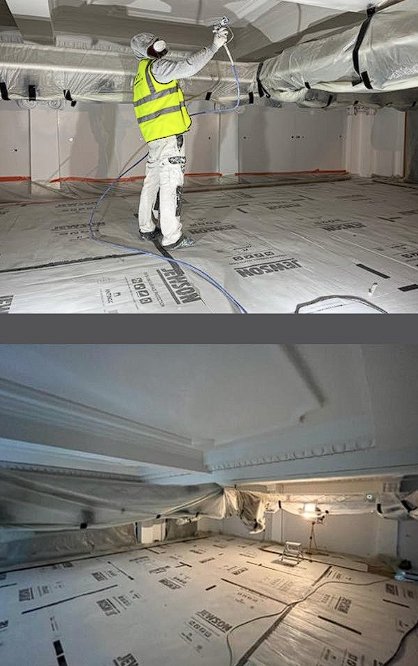
Find it, dry it, certify it.
Six stages, in order, each one recorded. The sequence matters because every stage sets the scope for the next: what you find determines what comes out, what comes out determines the drying programme, and the drying programme determines when reinstatement can safely begin.
Attendance and assessment
On site within hours of instruction. Initial tests establish how long the water has been present, how much moisture has been absorbed and how deep it has penetrated, which forms the basis of a targeted drying strategy.
Trace and access
Non destructive leak detection locating water, gas and energy leaks and areas of trapped moisture, so the source is pinpointed and dealt with before drying starts rather than found halfway through it.
Strip out
Unsalvageable materials removed, along with anything preventing the structure behind it from drying. Inventory taken, furniture removed and water extracted. Nothing is stripped that does not need to be.
Sanitisation and dehumidification
The property is sanitised and disinfected, then dehumidification is installed and set up to dry the affected structure under controlled conditions rather than left to air dry on its own.
Monitoring and certification
Drying monitored with regular progress checks against recorded moisture readings, and a certificate of drying issued on completion confirming the structure has reached a dry standard.
Reinstatement
Full reinstatement to pre loss condition by the same project team, under the same instruction. No handover between a damage management supplier and a separate building contractor.
Four ways to find a hidden leak.
Trace and access is a named section on most UK property policies, covering the cost of locating a hidden leak and making good afterwards. Non destructive detection keeps that cost down, because the less of a building you open up looking for a leak, the less there is to put back once you find it.
Acoustic profiling
Listens for the signature of water escaping under pressure, locating leaks in buried and concealed pipework without opening the structure.
Thermal imaging
Reads temperature differences across surfaces to map the spread of moisture and identify where water has travelled behind finishes.
Endoscopy
Camera inspection into voids, cavities and under floors through the smallest possible opening, giving a direct view of what is happening inside.
Tracer gas
Introduces a detectable gas into the system so the exact escape point can be found, effective where a leak is too small or too slow to hear.
The expensive mistake on a water claim is not the strip out. It is rebuilding onto something that was never properly dry. The certificate is the only reason anyone should be confident it was.
Decontaminated, not just cleaned.
Fire damage is rarely just the burnt area. Smoke travels through a building and settles into surfaces, cavities, ductwork and contents well beyond the seat of the fire, and the residue it leaves is corrosive and persistent. Diagnosis comes before any cleaning specification is written.
Nationserv assesses the extent and nature of the smoke damage to determine the right course of action, then carries out the decontamination: cleaning, sanitisation, strip out, inventory, furniture removal, water extraction and drying, since fire damage almost always brings water damage with it.
The outcome the property owner needs is not a building that looks clean. It is a building, along with its machinery and assets, that is genuinely free of incident related contaminants and can be handed back without something reappearing weeks later.
Drying, answered.
What is a certificate of drying?
A certificate of drying is the document issued when moisture readings across the affected structure have returned to normal levels for that building. It records that the property has reached a dry standard and is the point at which reinstatement can safely begin. Insurers and loss adjusters use it as the evidence that drying was completed rather than assumed.
What does trace and access mean on an insurance policy?
Trace and access is the section of a policy that covers the cost of locating a hidden leak and getting to it, along with making good afterwards. Nationserv uses non destructive methods including acoustic profiling, thermal imaging, endoscopy and tracer gas, which pinpoint the source with far less opening up than a traditional search.
Does a property always need stripping out after water damage?
No. Where a building can be dried in situ without trapping moisture behind a vapour barrier, stripping out is avoided. Strip out is specified where materials are unsalvageable or where they would prevent the structure behind them from drying. Assessment comes first, so the strip out scope reflects the actual condition rather than a default assumption.
How quickly can Nationserv attend an escape of water or flood?
Nationserv can be on site within hours of instruction for urgent escape of water, flood, fire and impact incidents. Speed matters because every hour a building stays wet increases the volume of material that has to be stripped out and the length of the drying programme.
Can Nationserv carry out the reinstatement as well as the drying?
Yes. Nationserv delivers drying, strip out and full reinstatement under a single instruction, so the same project team that dried the property returns it to pre loss condition. There is no handover between a damage management supplier and a separate building contractor, and one point of contact stays accountable to the adjuster throughout.
Water in the building? Call it in.
Same day attendance for escape of water, flood, storm and fire. Drying, strip out and full reinstatement under one instruction, with a certificate of drying before anyone rebuilds.